Welcome!
Welcome back to the PGP blog. In this blog post, you will find some suggestions for things that you might spot when out in nature this May, the best places to find them and some playful suggestions for free activities to help you and the little people in your life feel closer to the green spaces around you.
Spring Event

On the 25th of April, we opened the gardens to the community and welcomed many lovely families to share in some magical nature play. The sun was out, the flowers were blooming, and a range of activities were on offer, including spring flower pounding (where children created stunning prints to take home), mask-making (which resulted in some fabulous creations being worn around the event), nature painting, clay play, and so much more.
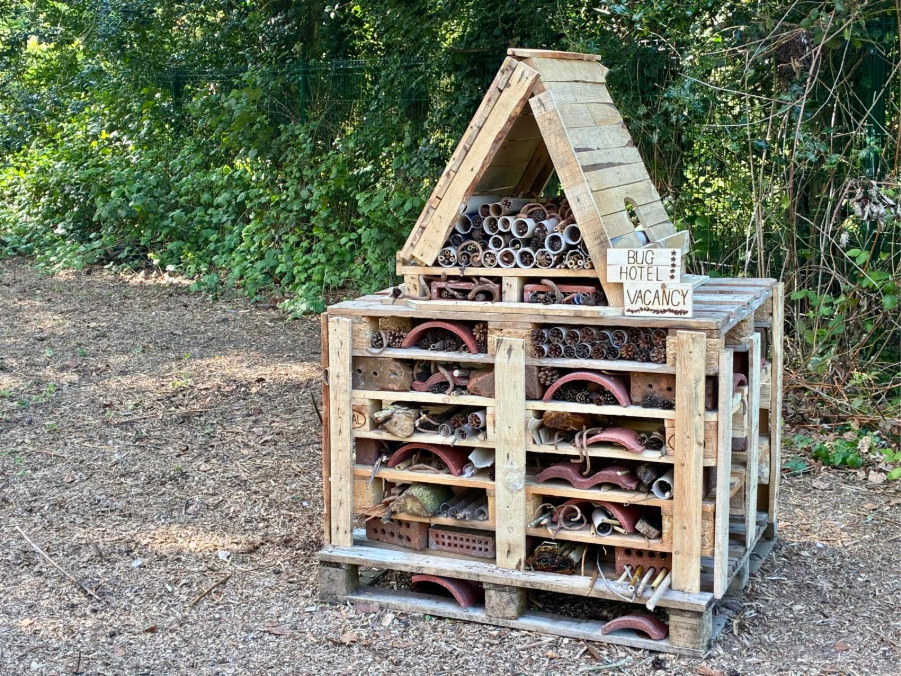
Families were also invited to contribute to some co-design opportunities on the day, including helping us to build a giant bug hotel, which had already started welcoming its first residents by the end of the afternoon. Attendees also worked with professional storyteller Alan Raw to create some magical Spring tales in our new story circle under the shelter of our giant ’octopus’ tree!
Thank you to all those who joined us and to our fantastic volunteers for all their hard work in creating another fantastic day for all in our community!


What might you spot in May?
We are now in the middle of the Spring season, and signs of new life and colour are all around us. When out and about with your little ones, here are some of the May treasures you might be able to spot together.
Buttercup

The Meadow Buttercup (Ranunculus Acris) is a fond and familiar sight at this time of year, with its glossy yellow petals making it easy to spot. You can find this native plant in grasslands, meadows and pastures. Indeed, you will most likely be able to spot it around this time of year on a walk in your local park. Buttercups are members of a very old family, with species of Ranunculus found in 20-million-year-old fossils! You have probably held one of these flowers up to your friend’s chin to see if they like butter! But did you know that the name buttercup comes from an old belief that cows grazing in fields with buttercups growing made the creamiest butter? Funnily enough buttercups are poisonous to cows, meaning they will avoid eating them, thereby increasing the number of buttercups growing in the field!
Common Blue Butterfly

Emerging in May, the Common Blue (Polyommatus Icarus), is the most common blue butterfly in the UK. These insects are found in a variety of different habitats, but can be most easily spotted in sheltered and sunny spots. A small butterfly, it is distinctive for its bright blue colouring, and caterpillars like to feed on Common Birds-foot Trefoil (Lotus corniculatus), which is a very common and widespread wildflower which you may find in parks and on grass verges.
If you would like more information and resources on Butterfly spotting across Hull, check out Hull Butterfly City Hull Butterfly City.
May’s nature connection activity – Butterfly spotting
You will need:
- No equipment needed!
- Optional extras: Binoculars, notebook and pencil, butterfly identification book.


Instructions:
Choose a spot: Head to a sheltered and sunny local area (Priory Meadows is a particularly good spot for butterfly spotting: with a good variety of wildflowers and weeds, as pollinators butterflies of all species are attracted to a diversity of flowering plants).
Don’t rush: You could walk at a leisurely pace, keeping your eyes peeled and staying curious. You could also find a comfy spot to sit and watch and see what happens.
Approach with caution: Butterflies are shy creatures and scare easily! Take care not to move suddenly or to cast shadows over them as this can frighten them. If you want to get a closer look, approach very slowly and carefully.
Documenting your finds: If you would like to identify the butterfly species you find, you might like to take a photograph so that you can remember the details of its wings, its size and colour better. You could also make a drawing of what you find – why not keep a butterfly journal over the Summer?
PGP Hull Diary: What’s happening next?
Early Years Daily Mile Launches at the Botanic Gardens
The Early Years Daily Mile will launch on 30 April at the Botanic Gardens in partnership with the Northern Branch of the London Marathon Charity, bringing schools and nurseries around Hull together to celebrate everyday movement and wellbeing alongside the ambassadors of Peppa Pig and her family.
The event invites children to take part in some nature-based activities and be involved in completing a simple mile (or 15 minutes!) of movement around the garden, reinforcing the message that regular physical activity should be accessible, enjoyable, and inclusive. By linking local school and nursery participation with the London Marathon, the initiative highlights how small daily actions can contribute to the wider well-being of children around Hull.
Maternal Mental Health Week Family Picnic:
We will be hosting a picnic for Maternal Mental Health Week on 7thMay in collaboration with Together in Nature from 4.00 pm – 6.00 pm at The Botanic Gardens. Book your ticket via the Eventbrite.
Wave and Willow Home educator sessions:
From the 20th of May Wave and Willow will be hosting their home education sessions on Thursday afternoons at our site in the Botanic Gardens. See here for more information: Explore Our Nature-Based Activities | Wave and Willow